1. Durability and Hardness: The "Strength" Factor
Quartzite is the clear winner in terms of sheer toughness.
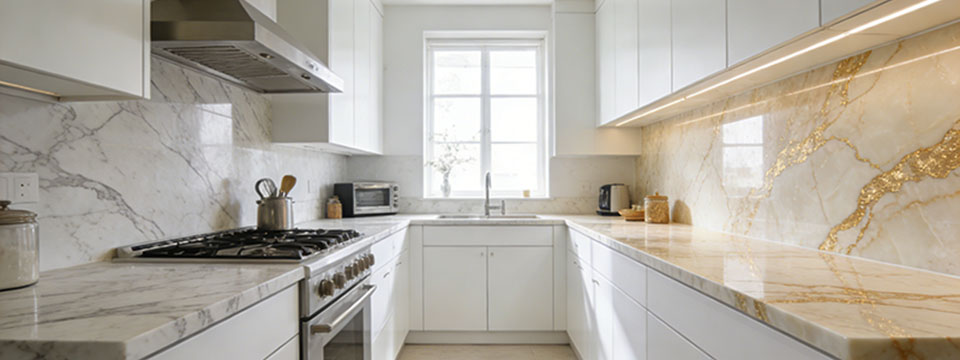
Quartzite: A metamorphic rock formed from pure quartz sandstone. It ranks about 7 on the Mohs scale. It is harder than glass and even harder than steel.
Marble: Composed of recrystallized carbonate minerals. It ranks about 3 to 4 on the Mohs scale, making it a "soft" stone prone to scratches.
2. Acid Sensitivity (The Etching Issue)
This is the most critical difference for a kitchen environment.
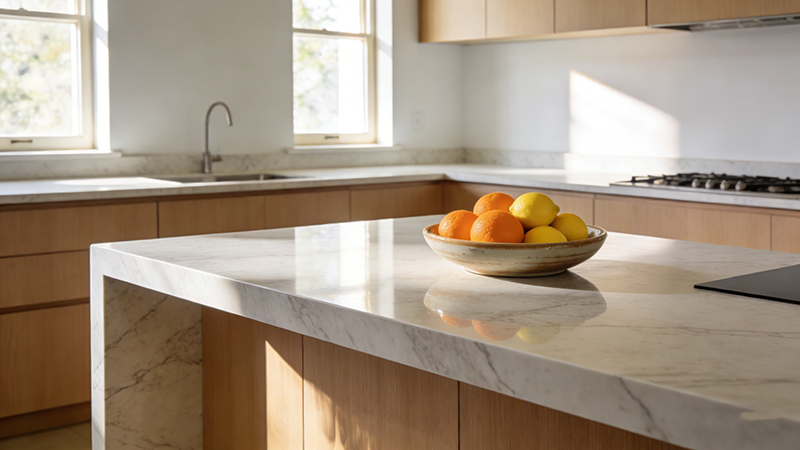
Marble: Highly sensitive to acidic substances like lemon juice, vinegar, and wine. These acids cause "etching"—dull spots that ruin the polish.
Quartzite: Generally acid-resistant. It does not etch when exposed to common kitchen acids.
3. Aesthetics and Veining
Both stones offer unparalleled natural beauty:
Marble: Known for its iconic, soft flowing veins (like Calacatta).
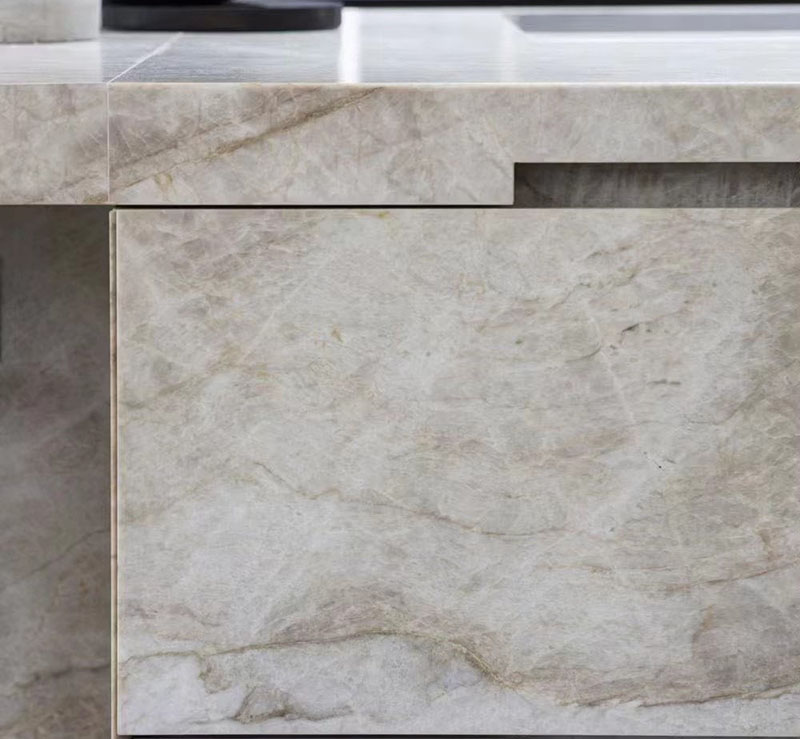
Quartzite: Often resembles marble but typically has more dramatic, "painterly" movement.
4. Maintenance and Sealing
All natural stones require care, but frequency varies:
Marble: Requires regular sealing (every 3-6 months) and extreme caution.
Quartzite: Extremely dense. Usually requires sealing only once a year and is much more forgiving of daily spills.
5. Price and Long-term Value
Price: Quartzite is often more expensive due to the difficulty of quarrying and cutting its extremely hard surface.
Value: It maintains its luster for decades, saving you money on professional re-polishing.
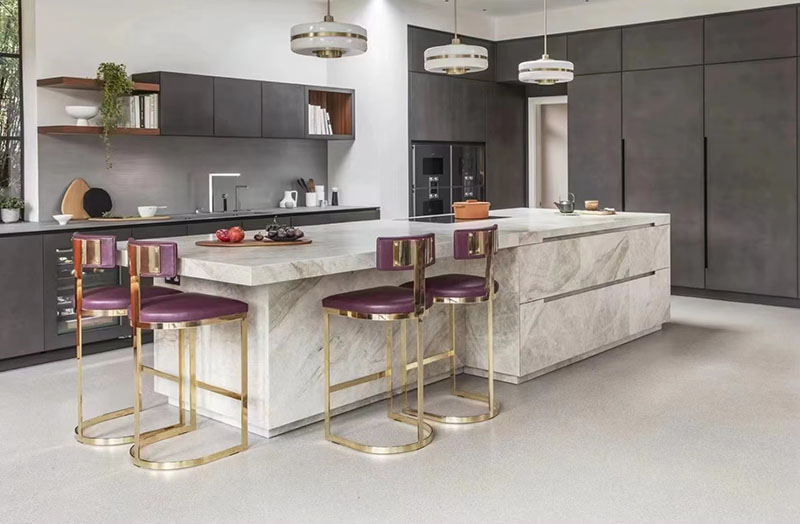
Conclusion: Which One Should You Choose?
Choose Marble if: You prioritize a specific classic aesthetic and are willing to embrace the "patina" (wear and tear) that comes with aging stone.
Choose Quartzite if: You want the luxurious look of marble but need a "worry-free" surface for a high-traffic kitchen.