
1. First Impressions Can Be Deceptive
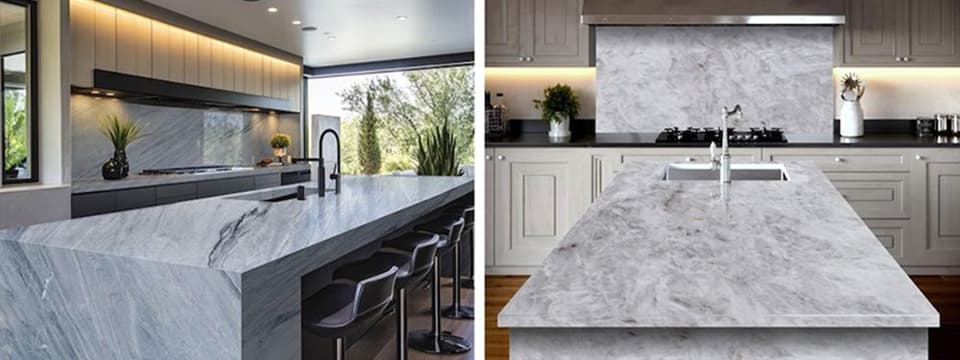
At a glance, quartzite and marble can look almost interchangeable. Soft whites, flowing veins, elegant movement—easy to confuse, easier to misjudge.
But look again. Touch it. Use it.
One of them resists. The other responds.
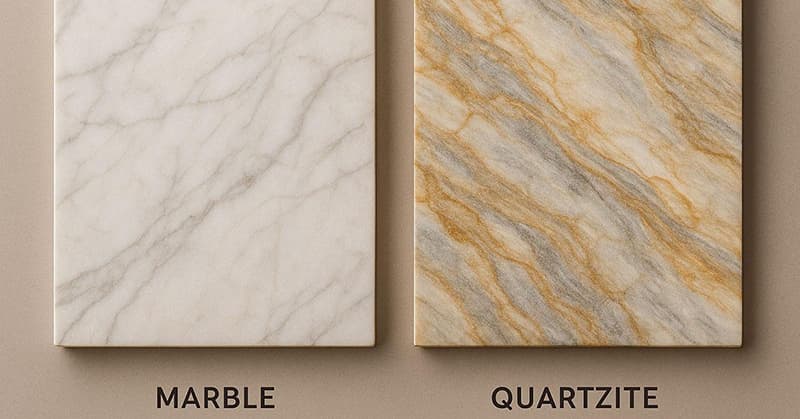
Marble is metamorphosed limestone—calcium-based, reactive, expressive. Quartzite, born from sandstone, is denser, harder, almost stubborn. They may speak the same visual language, yet behave like entirely different materials.
So the real question isn't "which looks better?"
It's—what happens after installation?
2. Performance Under Pressure
This is where the divergence becomes impossible to ignore.
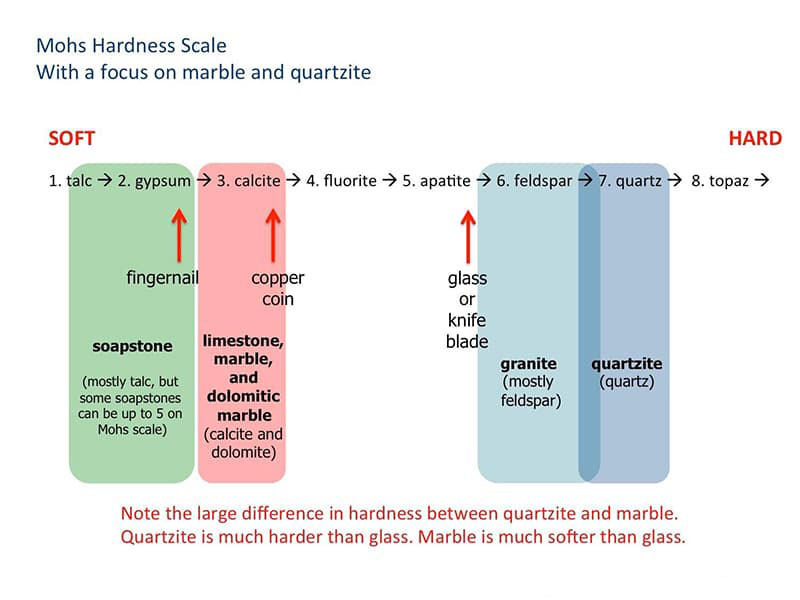
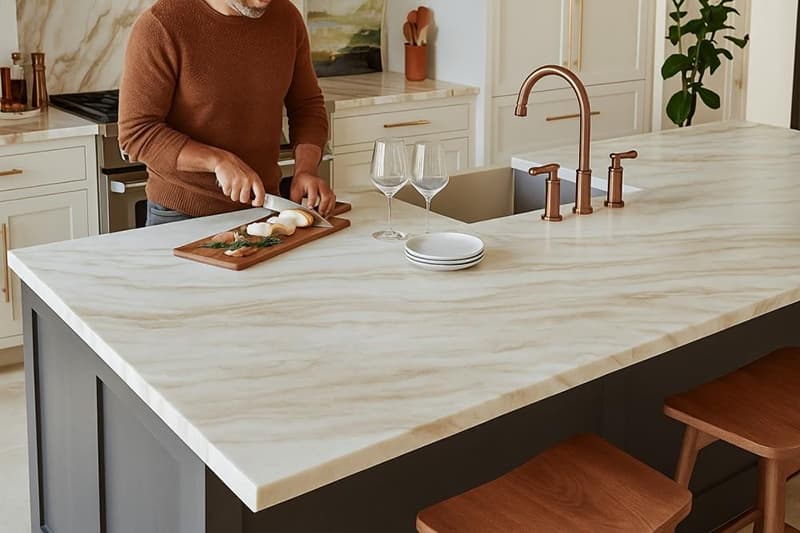
Quartzite is tough. Not just marketing-level "durable," but structurally resilient. It resists scratches. It shrugs off heat. In most cases, it tolerates daily use without complaint.
Marble? More sensitive. More reactive.
What that means in real use
- Marble can etch when exposed to acids—sometimes instantly
- Quartzite is far more scratch-resistant
- Both require sealing, but marble is generally more porous
Spill wine on marble and you might remember it. Spill it on quartzite—you'll probably just wipe it away.
Is that a flaw in marble? Or part of its character? Depends who you ask.
3. Aesthetic Character: Controlled vs Expressive
Marble doesn't hold back. Its veining can be dramatic, almost theatrical—bold strokes across a pale canvas. Designers love it for that reason. It makes statements without asking permission.
Quartzite tends to be quieter. Not always—but often. Its patterns feel more geological, less graphic. Movement exists, but it's usually restrained.
How designers typically approach them
- Marble for visual impact and artistic expression
- Quartzite for subtle texture and long-term versatility
But here's the twist—some quartzites mimic marble so closely that even professionals hesitate. Until the first scratch test.
4. Cost, Risk, and Decision-Making
Price isn't straightforward. It rarely is in stone.
Some marbles are affordable. Others—especially rare varieties—reach premium levels. Quartzite, particularly high-quality or exotic types, often sits at the higher end due to hardness and processing difficulty.
But cost isn't just material. It's risk.
What influences the final decision
- Installation complexity (quartzite is harder to cut and process)
- Long-term maintenance expectations
- Tolerance for change, wear, and natural aging
Choose marble, and you accept evolution. Choose quartzite, and you prioritize stability.
Neither is "better." That's the wrong framework.
Conclusion
Quartzite or marble?
It's not a technical question. It’s a philosophical one—whether you value resilience over responsiveness, consistency over character.
Marble records life. Every mark, every subtle change.
Quartzite resists it. Holds the line. Stays almost as it was.
So—do you want a surface that changes with you?
Or one that refuses to?
That answer usually decides everything.